
Light and creamy European-style no-bake cheesecake
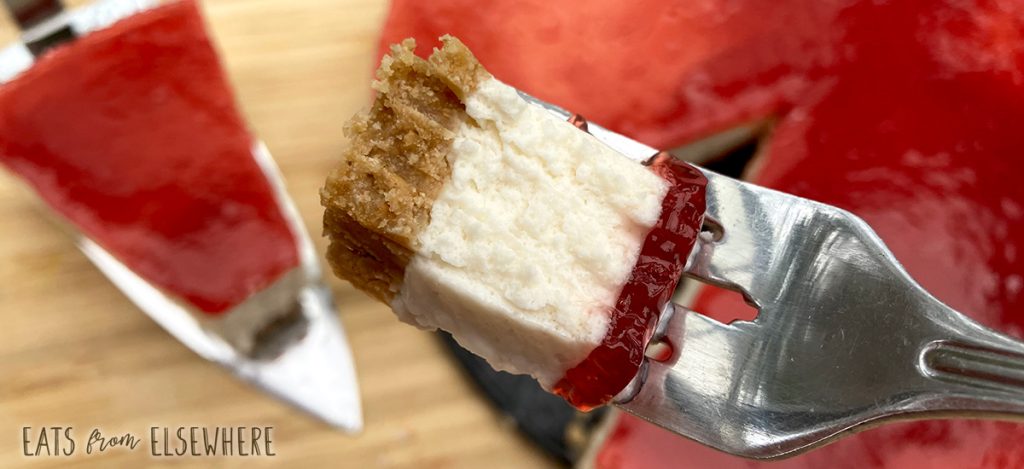
This creamy European-style no-bake cheesecake recipe will melt in your mouth. It has a marvelously light texture, not at all dense. The flavor is fresh, the acidity is well balanced, and the cream cheese flavor is quite mild. A gelled red berry topping brings the flavors together exquisitely. This is easily my family’s favorite cheesecake! I hope you enjoy this recipe as much as we have!
This is a great make-ahead dessert. Just be sure to plan on at least 4 hours for it to chill, and overnight is even better.
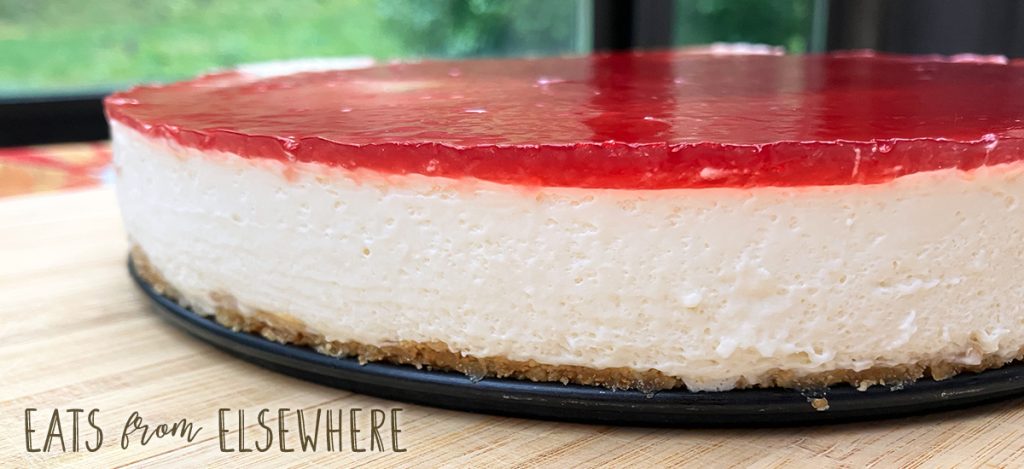
This no-bake cheesecake is called European-style because it is a bit lighter than a typical American no-bake cheesecake, with more cream, and less cheesy flavor. I first tasted this style of cheesecake in Norway, where no-bake seems to be a popular cheesecake style, especially flavored with a bit of lemon and red berries. I was on a mission to recreate this treat. 😊 In both Germany and here in France, you can also find similar no-bake cheesecake recipes, although baked versions do predominate. From whichever corner of Europe, this is now my favorite cheesecake recipe. I hope you enjoy it as much as we have!
So, why is European-style no-bake cheesecake lighter than American style? Keep on reading 😉
Cream cheese in America versus Europe
The main ingredient, cream cheese, is not a simple switch when you’re trying to make classic American cheesecake with European cream cheese. Cream cheese just isn’t the same between the US and Europe.
In America, standard cream cheese is quite firm and has about 34% fat. It also typically contains a couple gums, often guar and/or carob bean gum, to help hold in the water because there’s so much fat.
Here in France, land of soft cheeses like brie and camembert, the cream cheese is softer, too. It also has less fat (around 18-21% depending on the brand) and may or may not have the added gums (again, depending on the brand). In Germany and Norway, it’s the same story. Even the American brand Philadelphia had to adapt their classic cream cheese recipe to European tastes to sell here!
So, if you’re not in Europe, what to use to make this European-style no-bake cheesecake? I used a mix of standard American cream cheese and milk with very good results. Just be sure to really soften the cream cheese and add the milk a bit at a time, otherwise you have cheese clumps floating in milk.
Alternatives to Graham crackers
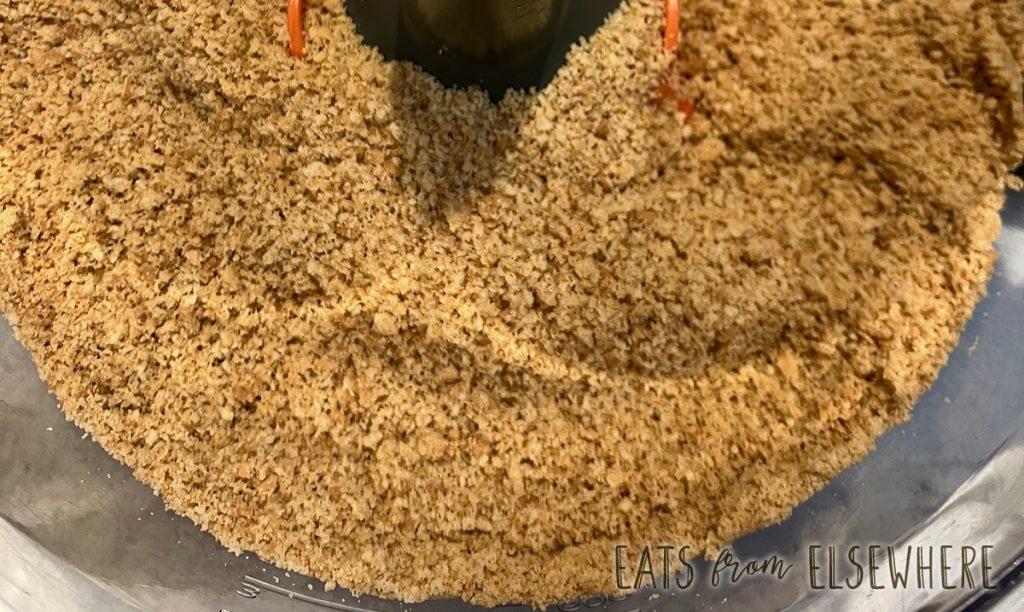
Now, the crust on this no-bake cheesecake should be an American-style Graham cracker crust. It’s just the best…except there are no Graham crackers here in France. So, since this is European-style cheesecake, I used a European alternative.
For a British take, McVitie’s digestive biscuits are the closest alternative to Graham crackers (and my favorite option). Like Graham crackers, these use a coarse wheat flour and are relatively low in fat (comparing to an average cookie). A more French alternative is the “petit beurre” cookie. This is a classic butter cookie from Nantes with only a little more fat than graham crackers, but using classic white flour. The German Leibniz butterkeks are another option, very similar to the petit beurre. Belgian Biscoff (speculoos) is also a yummy choice!
Feel free to use whichever biscuit/cookie/cracker is available where you live!
How to firm up your European-style no-bake cheesecake
The key to setting the texture of this creamy European-style no-bake cheesecake is gelatin. (Really, it’s easy.) The magic of gelatin is that it gels at refrigerator temperatures, but it melts in your mouth. In this cheesecake, it really gives a perfect texture. Since this cheesecake uses a soft, lower-fat cream cheese, plus a fair amount of whipped cream and sour cream, we need the gelatin to avoid a mushy cheesecake.
So why don’t most American no-bake cheesecake recipes call for gelatin? American cream cheese is so firm (from all that fat and those gums;) that the cheesecake sets up more easily.
If you’re vegetarian, agar agar is a vegetarian alternative to gelatin, but the gel is a bit firmer and less melt-in-your-mouth. I haven’t tried this recipe with agar agar, but feel free to give it a try if you’d like!

How to use gelatin, easy peasy
The keys to using gelatin in this recipe are fairly simple:
- Hydrate: First, rehydrate gelatin in cold water for about five minutes before using.
- Dissolve: Then, add the hydrated gelatin into a hot liquid to dissolve it. To avoid lumps, be sure to whisk it in well.
- Don’t boil: Very important: do not boil gelatin. It will not gel after.
- Chill: Lastly, let your creation chill in the fridge for at least four hours so that the gelatin can set up properly.
For this recipe, we’re using powdered gelatin (as opposed to sheets) because powdered is more universal. It’s also usually cheaper 😉
You might also like…
For other creamy dessert options, check out my orange blossom rice pudding or my creamy lemon ginger bars!
Let’s get baking! Enjoy!
European-Style No-Bake Cheesecake
Ingredients
Crust:
- 200 g (7 oz) McVitie’s digestives or Graham crackers
- 120 g (8.5 tbsp) butter melted
Filling:
- 3 tsp (7 g) gelatin powder
- 170 g (¾ cup) heavy cream very cold
- 400 g European-style cream cheese, softened, or 225 g (8 oz) American full-fat cream cheese, very softened + 180 ml (¾ cup) whole milk
- 100 g (7 tbsp) light crème fraîche or sour cream
- 85 g (⅓ cup) sugar
- 1.5 tsp vanilla
- 1 tbsp + 2 tsp lemon juice
Topping:
- 150 g (½ cup) currant jelly
- 2.5 g (rounded ¾ tsp) powdered gelatin
Instructions
- Place a medium bowl and the beater attachments for a hand mixer in the freezer.
Crust
- Grind the digestives or Graham crackers into fine crumbs using a food processor. Alternatively, place the cookies in a plastic zip-top bag and crush with a rolling pin, but this takes time to get fine crumbs.
- Pour the melted butter over the cookie crumbs and mix in, either with the food processor or with a spoon.
- Prepare a 26-cm diameter springform pan by cutting out a circle of parchment paper the size of the pan’s bottom, and place the paper in the bottom of the pan. (This is only to help transfer the cheesecake out of the springform pan later, if desired.)
- Pour the buttered cookie crumbs into the prepared springform pan, and press firmly into an even layer. Place in the refrigerator for at least 30 minutes before adding filling.
Filling
- Place 3 tablespoons cold water in a small bowl. Sprinkle the gelatin powder over the liquid and whisk in. Let stand 5 minutes while you prepare the rest of the filling.
- Pour the 170 g cold, heavy cream into the medium bowl that you put in the freezer. Beat the cream with the cold beaters until a firm whipped cream forms. Set aside in the refrigerator.
- In a large bowl, beat the softened cream cheese, light crème fraîche, sugar, and vanilla until smooth. If using full-fat American cream cheese, add the milk last.
- Heat the lemon juice until just until below boiling, and pour into the gelatin and water mix. Mix well, dissolving any lumps. The heat from the lemon juice should be enough to melt the gelatin. If some gelatin remains undissolved, heat the bowl gently until dissolved, but do not boil or the gelatin will lose its ability to set.
- Using the beaters, mix the gelatin into the cream cheese mixture. Fold in the whipped cream. Pour the filling onto the pie crust, and spread flat and evenly.
- Refrigerate the cheesecake for at least 3 hours before adding the topping.
Topping
- In a small bowl, mix 2.5 g (rounded ¾ tsp) gelatin powder with 20 g (1½ tbsp) cold water. Let sit for 5 minutes.
- Heat the currant jelly to about 70 °C (160 °F) to liquify the jelly. Whisk in the hydrated gelatin & water mix until all the gelatin has dissolved. Let cool for about 5 minutes (to avoid melting the top of your cheesecake), then pour evenly over the top of the cheesecake.
- Place the cheesecake back in the refrigerator for at least 1 hour before serving, preferably overnight.
1 thought on “Light and creamy European-style no-bake cheesecake”