
Korean-style hasselback carrots with other winter vegetables
This recipe gives hasselback carrots a Korean flair with a spicy and sweet gochujang sauce. Add parsnips and your choice of other root vegetable for some variety. With easy prep, this is a great addition to a Korean-themed meal.

The hasselback roasting technique isn’t just for potatoes. You can roast any winter vegetable hasselback-style to get wonderfully crispy tips and let flavor penetrate to the heart of your vegetables. Roasting whole veggies takes a while in the oven, so be sure to plan on an hour and a half to prepare this dish start to finish.
How to easily cut hasselback carrots
The trick to getting all those cuts without cutting your carrot in two (or more!) pieces is to place a wooden chopstick on one or both sides of the carrot. This way, when you’re cutting, the chopstick blocks the knife from cutting all the way through. Pick chopsticks you are willing to sacrifice since you will make little knife marks in them.
Hasselback carrots and parsnips are the trickiest to cut because these vegetables are rather brittle when raw. Myself, I ended up with a couple in two pieces when I was cutting using one chopstick. No worries, though, just push the ends together in the roasting pan, and they still cook up great.
What is gochujang?
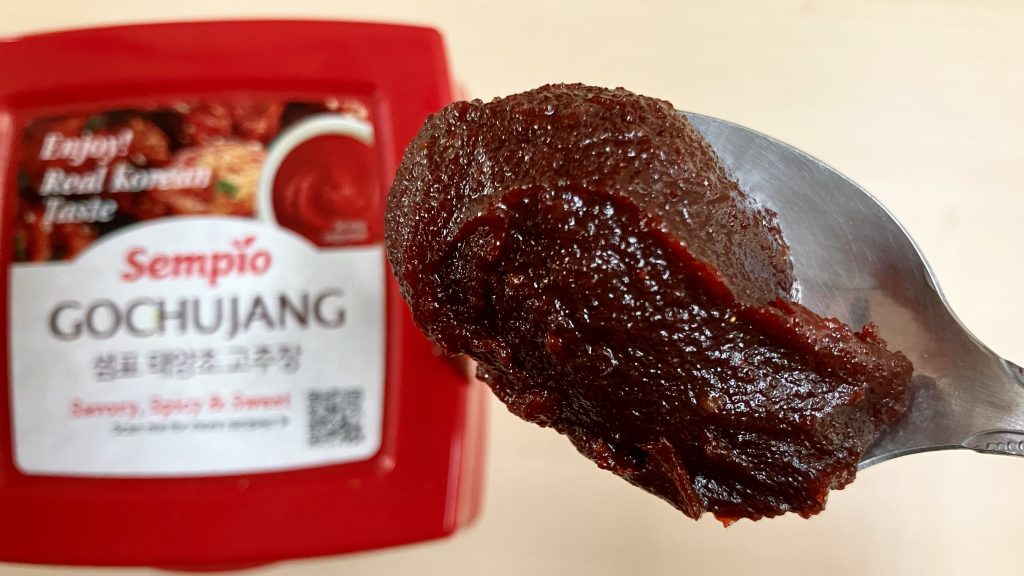
Popular in Korean cuisine, gochujang is a fermented red chili paste. Along with chilis, the paste also includes glutinous rice and fermented soybean powder. Depending on the recipe used, gochujang can range from mild to very spicy. The spiciness is more of a slow burn that amplifies the flavors in your dish. Spiciness aside, this chili paste has a complex savory and slightly sweet flavor that adds a real boost to this dish.
Traditionally, gochujang is a key ingredient in dishes like Korean barbecue or bibimbap. Today, with the popularity of Korean, you can find it in many a Korean-inspired dish. Here in France, gochujang can still be hard to find outside of Asian grocery stores, but I did find a container at a well-stocked hypermarché (the biggest type of grocery store).
Substitutes for gochujang
Since gochujang isn’t always easy to find, here are a couple ideas for tasty substitutes:
- Best option: Miso paste + your favorite red chili paste (such as sriracha or even tabasco) + maple syrup
- Mix these ingredients in a ratio of 3:2:1. (For 1 tbsp for this recipe, use ½ tbsp : 1 tsp : ½ tsp)
- Easiest ingredients: Tomato paste + soy sauce + your favorite red chili paste (such as sriracha or even tabasco) + maple syrup:
- Mix these ingredients in a ratio of 3:3:4:2. (For 1 tbsp for this recipe, use ¾ tsp : ¾ tsp : 1 tsp : ½ tsp)
If you need an idea for leftover miso paste, you can try my ultimate umami tomato sauce. 😊
Which root vegetables to pick
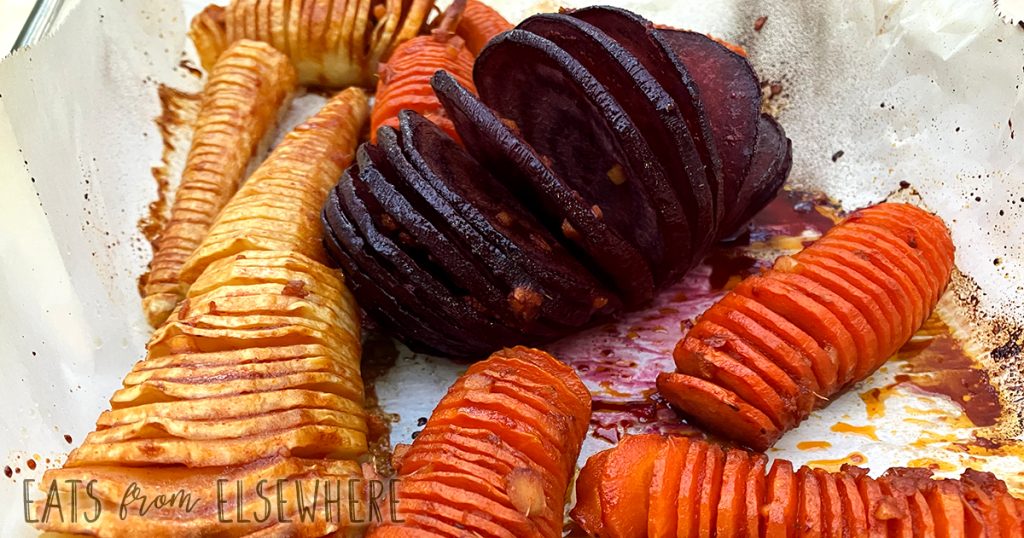
This dish is excellent with carrots and parsnips. Beets add a lovely, colorful touch, though I find the Korean flavor goes better with the carrots & parsnips. Turnips, rutabaga (swedes), and potatoes are other options, though I haven’t tried these with the Korean sauce. In all cases, you can keep the baking time the same thanks to the hasselback cut.
I hope you enjoy my Korean-style hasselback carrots!
Korean-style hasselback carrots with other winter vegetables
Ingredients
- 3 large carrots about 400 g (14 oz)
- 2 large parsnips about 400 g (14 oz)
- 1 other root vegetable about 250 g (9 oz), such as a beet, a rutabaga, or 2 carrots
- 3 tbsp neutral oil
Sauce:
- 1 tbsp gochujang chili paste see note for substitute
- 1 tbsp soy sauce
- 1 tsp sesame oil
- 1 tbsp maple syrup
- 2 tsp fresh grated ginger
- 2 garlic cloves minced
For serving:
- Toasted sesame seeds
- Chopped cilantro
Instructions
- Preheat the oven to 220 °C (430 °F).
- Prep the veggies: Peel the vegetables. With a chopstick on either side of the vegetable to stop the knife, cut 2-3 mm (1/8 inch) slices into the entire upper length of each vegetable, leaving the bottom ½ cm (1/4 in) uncut.
- Brush the vegetables with the oil, letting some oil get in between the slices.
- Bake at 220 °C for 1 hour, uncovered. The vegetables should be almost fully cooked at this point.
- Prep & brush on the sauce: While the vegetables bake, mix all the sauce ingredients together. After baking for 1 hour, brush the sauce over the vegetables, again getting in between the slices. Return the vegetables to the oven and bake for another 10 minutes.
- Serve sprinkled with toasted sesame seeds and chopped cilantro leaves.
Notes
- If you can’t find gochujang, you can substitute ½ tbsp miso paste + 1 tsp sriracha + ½ tsp maple syrup.