
Authentic French quiche Lorraine
French and American quiche Lorraine are not the same. As an American with a husband and in-laws from Lorraine, I learned this the hard way. Here I’ll share the differences with you and my recipe for an authentic French quiche Lorraine. Buttery pastry and a rich filling with thick, smoky bacon – the authentic version is delicious. Enjoy! 😊
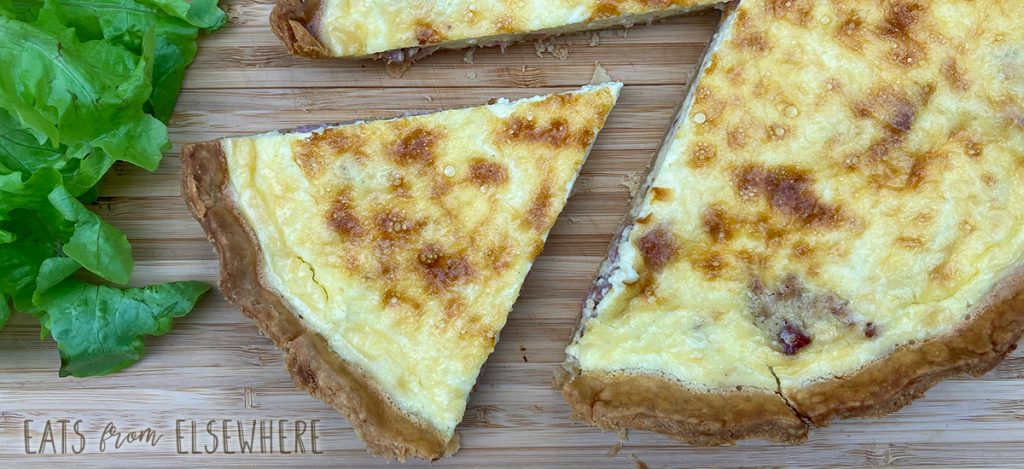
“Not quiche Lorraine”
When I first tried to make quiche Lorraine for my then-future husband, things went wrong very quickly. I started pouring heavy cream into the eggs. “But it’s not crème fraîche!!” he said. Then I started to add milk. “Noooo! There’s no milk in quiche Lorraine!” he continued. Monsieur enjoyed my “not-quiche,” but I have heard ever since about what goes into a “real” quiche Lorraine. Not that I always make it that way, but I can, and I’m sharing that authentic, rich and tasty version here.
Quiche Lorraine is a very popular dish to make at home in France, and recipes vary from family to family, even within Lorraine. Overall, for those in Lorraine today, the guidelines explained below remain the same. If you’ve had a different experience, don’t hesitate to share in the comments!

French quiche Lorraine vs. American
Everyone can agree that quiche Lorraine is eggs, mixed with some sort of cream/milk and cured pork bits, and baked in a pie shell. Now, for the differences. Here they are at a glance:
The basics:
- Size: French quiche is thin, whereas American quiche is thick. My mother-in-law only uses 2 or 3 eggs when she makes quiche, whereas I would use 5 or 6.
- Which course: Thin quiche works in France because the French consider it more of light meal or a first course. In America, people expect it to be the main dish, hence being thicker. In America, quiche is even served for breakfast sometimes, which you would never see here in France. Eggs just aren’t standard breakfast food here outside of hotels and brunch menus.
The crust:
- Pie shell: Whichever savory pie crust you choose, you can’t go wrong. Between France and America, the choices aren’t the same, though. In France, there are two options for savory tarts, pâte brisée (a very short-textured pie crust) and pâte feuilletée (puff pastry). Pâte brisée is more traditional for quiche Lorraine, but either tastes great. In America, the traditional pie crust is halfway between these two: it’s rather flaky, but not laminated like puff pastry. My recipe below includes directions for making a pâte brisée.
The filling:
- Cream & milk: For my Lorrainian in-laws, the only cream to use is crème fraîche, preferably full fat (30% fat). Crème fraîche means “fresh cream” in French, but it’s actually a slightly tangy, fermented cream with a sliky, thick texture. Light crème fraîche exists, too. It’s 15% fat, and similar to American sour cream. Light crème fraîche will give you a lighter, if less authentic, result. For all this about crème fraîche, many French recipes for quiche Lorraine use heavy cream, with or without milk, like American recipes usually do. However, I am assured that the French cooks using heavy cream must not be from Lorraine. 😉
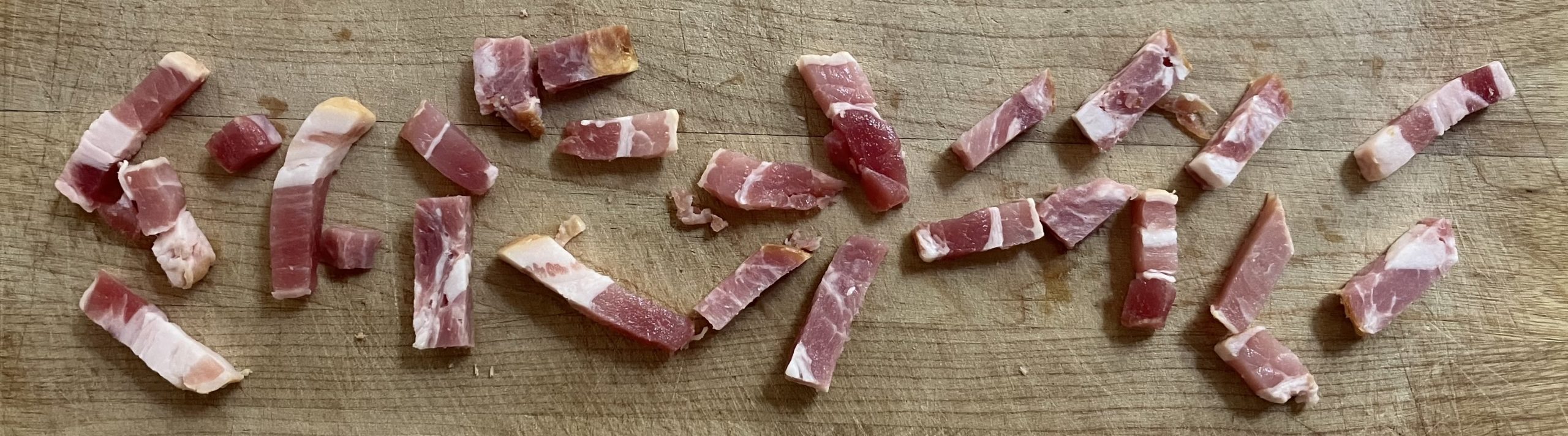
- The pork: In Lorraine, lardons are used everywhere. If you aren’t familiar with lardons, they are pork belly cut into matchsticks, like in the photo below. They’re similar to thick-cut American-style bacon, but a bit less fatty. For quiche Lorraine, you want smoked lardons.
Not in Lorraine:
- Cheese: No cheese in a traditional quiche Lorraine. However, adding shredded gruyère, comté, or emmental (Swiss-style cheeses) is quite common. French quiche Lorraine will never have cheddar or Parmesan, no matter how delicious they are with eggs. Sometimes, the cheese is put at the bottom of the pie crust to avoid the egg mix absorbing into the crust. Other times, the cheese is sprinkled on top or mixed in, like in American quiche.
- Nutmeg: It’s not traditional, but you might find it in a French quiche Lorraine recipe. It is, after all, a classic French companion to eggs and cream.
- Other ingredients: Onions, shallots, parsley, chives, red pepper flakes, or Cayenne pepper. No. Absolutely not in traditional quiche Lorraine. They’re good, but my Lorrainian in-laws would cry foul.
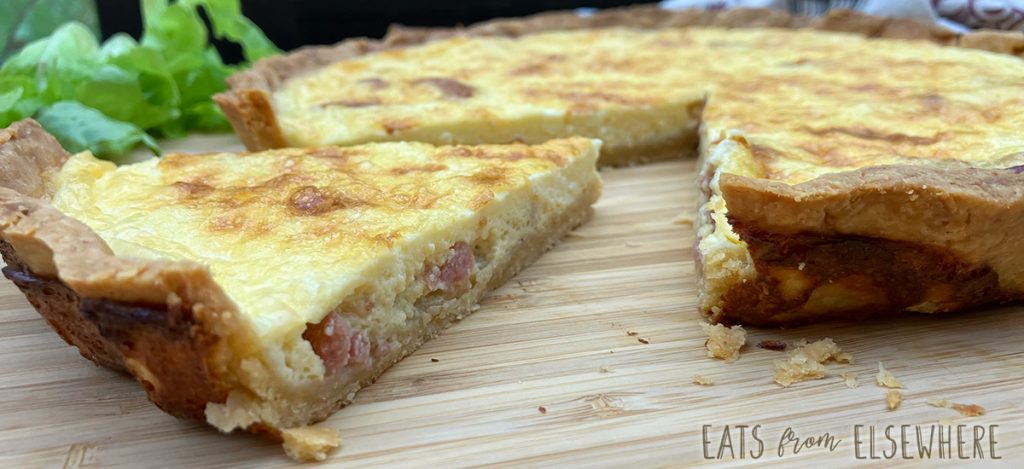
Substitutes for crème fraîche in French quiche Lorraine
If you can’t find crème fraîche, you can still make this delicious quiche. Sure, it might be less authentic this way, but, at least in the States, crème fraîche isn’t sold everywhere. Here are four simple options for substitutes:
- Sour cream with 30% fat: This is very close to crème fraîche, but richer than standard sour cream and not found everywhere.
- Heavy cream: The easiest substitute, but lacks the acidic tang
- Heavy cream + lemon juice: Lemon juice brings a citrusy tang and thickens the cream. Drizzle in lemon juice while whisking vigorously until the cream thickens a bit. (For this recipe, about 1 tbsp lemon juice for 235 g (8.3 oz) heavy cream.) It’s important to add the lemon juice while whisking to avoid curdling the cream. Don’t whisk too long, though, or you’ll have whipped cream.
- Cream cheese + milk: Thin out softened cream cheese with some milk until you have the texture of a thick sour cream. (For this recipe, about 2 tbsp milk for 220 g (7.7 oz) cream cheese.) Cream cheese will add a bit of extra protein to your quiche, which can change the quiche’s texture. I saw this sub suggestion online – haven’t tried it myself, but seems like it should still be tasty.
Bon appétit !
Now that you know what makes an authentic French quiche Lorraine, let’s get cooking!
Did you make this recipe? Let me know how you liked it in the comments!
You might also enjoy…
If you enjoyed this French quiche Lorraine and want more French-style eggs, you might also enjoy my comté cheese & hazelnut soufflé.
If you make a double batch of pie crust, try using the second crust in this fantastic roasted red pepper & tomato tart!

Authentic French Quiche Lorraine
Ingredients
Shortbread crust – pâte brisée (see note 1)
- 220 g (1½ cup) flour
- ¾ tsp salt
- 115 g (½ cup) cold butter
- ½ egg yolk see note 2
- 2 tbsp water
Filling
- 150 g (5.3 oz) smoked lardons see note 3
- 3 eggs
- 250 g (8.8 oz) crème fraîche see note 4
- ½ tsp salt
- White or black pepper to taste
Instructions
- Prepare the pie dough: Mix flour and salt in a large bowl. Cut the butter into small cubes and add to the flour. Using your fingers, rub the butter into the flour until the mixture resembles breadcrumbs.
- In a small bowl, whisk half an egg yolk with 2 tbsp water. Gradually mix this mixture into the flour just until the dough comes together. You may not need all of the egg-water mix.
- Form into a flattened ball, cover with plastic wrap, and refrigerate 30 minutes. The refrigerated dough will keep up to a week tightly wrapped. If the dough gets too hard in the fridge (butter solidifies), you’ll need to let it sit at room temperature until just workable before rolling out.
- Blind bake the crust: Preheat the oven to 200 °C (392 °F) Roll out the chilled crust to fit your pie pan (I used a 25 cm/10 in ceramic pie pan). Lay the crust in the pie pan. Trim off any excess crust. Prick the bottom of the crust with a fork in several spots to avoid puffing in the oven. Place pie weights (such as dried beans) on top of parchment paper in the crust. Bake at 200 °C for 15 minutes. Remove the parchment paper and pie weights, then bake another 10 minutes.
- Make the filling: Cook the lardons in a pan over medium heat until nicely browned but not crispy. Whisk together the eggs, crème fraîche, salt, and pepper.
- Arrange the cooked lardons on the bottom of the pie crust, leaving the rendered fat in the pan. Pour the egg mixture over the lardons.
- Bake in the oven at 200 °C (392 °F) for 25 minutes or until the top is golden brown and the center of the quiche is set.
Notes
- It is also possible to use a store-bought pie crust. In my experience, with a store-bought pâte brisée crust (usually thinner than homemade) and a metal pie tin, I did not need to blind bake the crust.
- To use an entire egg yolk, feel free to double the recipe and save half for another pie.
- Smoked lardons can be substituted with thick-cut American-style smoked bacon or pork belly cut into ¼-inch thick matchsticks.
- See the text of the post for crème fraîche substitutions.